Brand positioning
Give the identity a clear foundation: who you need to reach, what they should understand, and what distinguishes your offering. The brief should surface the gap between how the business presents itself today and what it has become.
Trusted by dozens of ambitious ventures





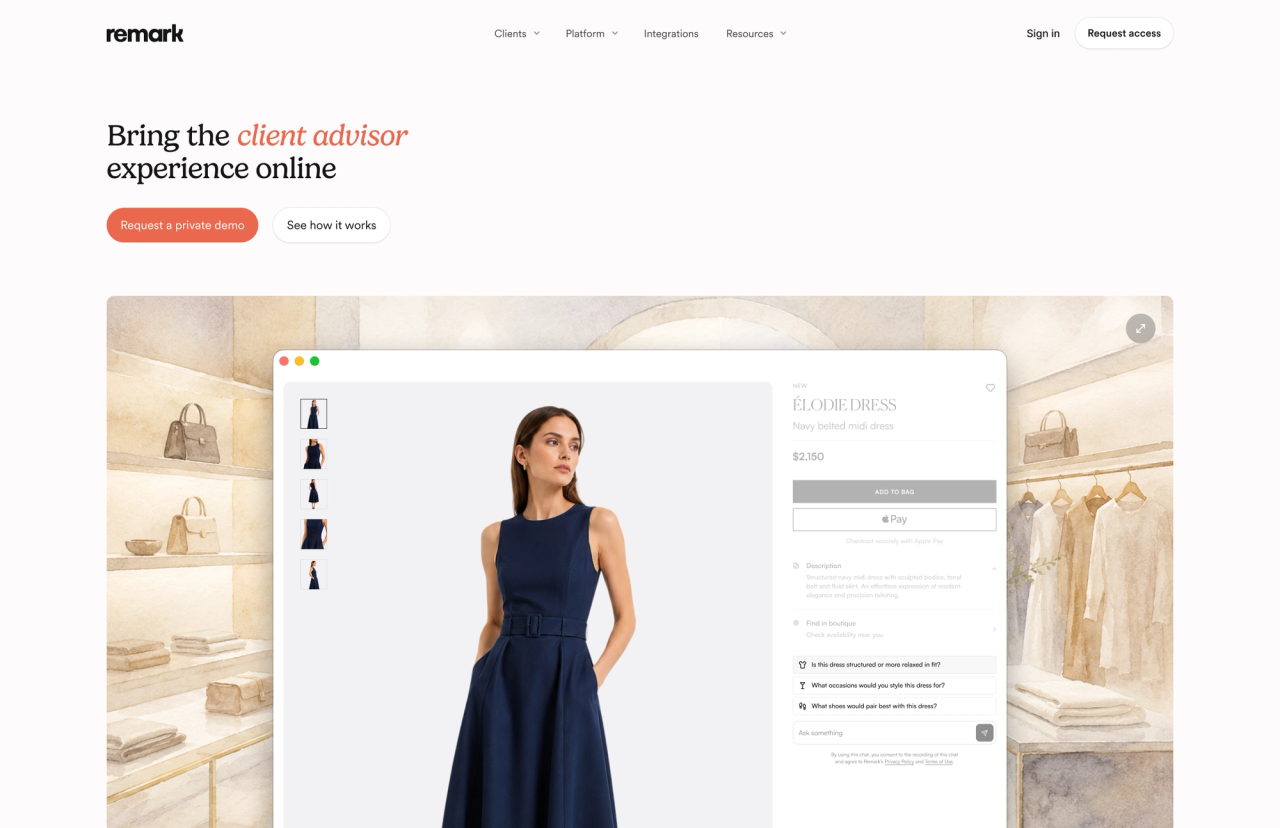
We develop identities that connect a business’s positioning with the places people encounter it. For Unwrap, that meant a ribbon-inspired identity balancing a playful character with a technically sophisticated product. For Remark, it meant a flexible visual system across the website, investor decks, social media, and print.
A connected set of capabilities, shaped around your business.
Give the identity a clear foundation: who you need to reach, what they should understand, and what distinguishes your offering. The brief should surface the gap between how the business presents itself today and what it has become.
Translate that direction into a visual language for the business. Our work for Unwrap centered on a ribbon-inspired logo symbol that carried its approachable character into the website.
Develop a connected system rather than a collection of isolated assets. For Remark, the visual language extended from the website into investor decks, social media, and print materials.
Document the principles and applications needed to use the identity consistently. The scope should identify which assets, examples, and guidance your team needs for its day-to-day materials.
The decisions that shape the scope, collaboration, and handoff.
Start with the identity’s real destinations, from a website to a presentation or campaign. That helps define whether the project needs a focused refinement or a broader visual system.
Bring existing assets, audience knowledge, and the elements you want to retain. Unwrap’s co-founder describes our approach as leading the design process while listening and incorporating the team’s feedback.
Agree which brand assets, application examples, and guidelines belong in the handoff. File formats, licensing, and responsibility for future materials should be clear in the project scope.
See the thinking in practice.
A closer look at our brand identity services, what they include, and how they work.
Yes, a brand identity project can build on elements that still serve the business rather than replace everything. Identify the logo, colors, typography, and other recognizable assets you want to retain, alongside what no longer reflects the offering. That distinction helps define a refresh versus a more extensive identity project.
Yes. Our Unwrap and Remark projects both combine brand identity and website design. Working across the two connects the visual system to actual page content and interactions, while the scope can also account for applications beyond the website.
Our Remark work extended across social media, print materials, and investor decks as well as the website. These are examples of applications, not a fixed package. The brief should identify the formats your team uses so the system and deliverables reflect those needs.
Your team brings the product knowledge, customer context, and existing materials that make the brief specific. Identify who will review the work and consolidate feedback. In our published Unwrap testimonial, the co-founder highlights the balance between our design direction and incorporating their feedback.
Agree the assets, file formats, application examples, and usage guidance needed for the people using the identity. Font and image licensing, source-file access, and rights should also be addressed in the project agreement. A brand identity scope should not leave those expectations implicit.
We partner with ambitious organizations to build brands and digital experiences that create impact. Let’s talk about your project.